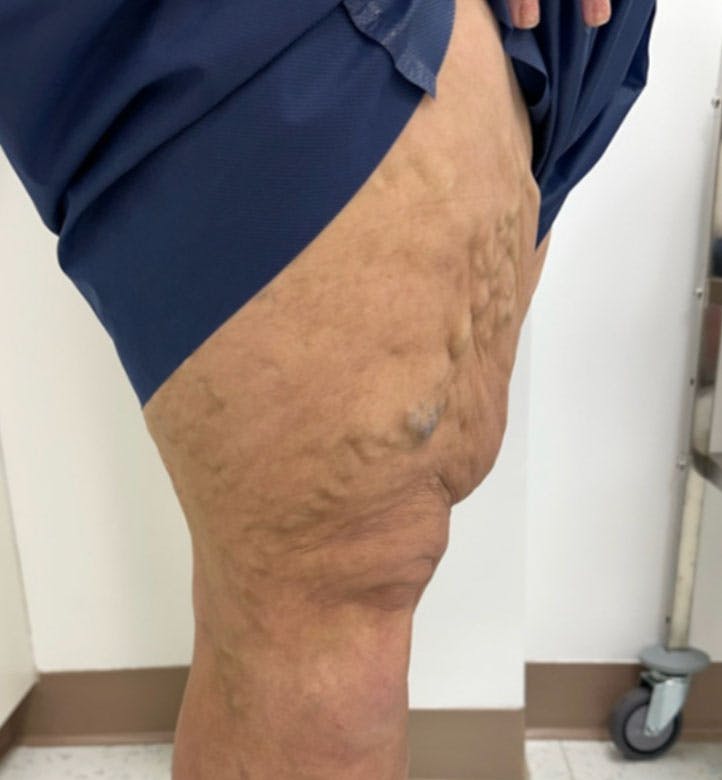
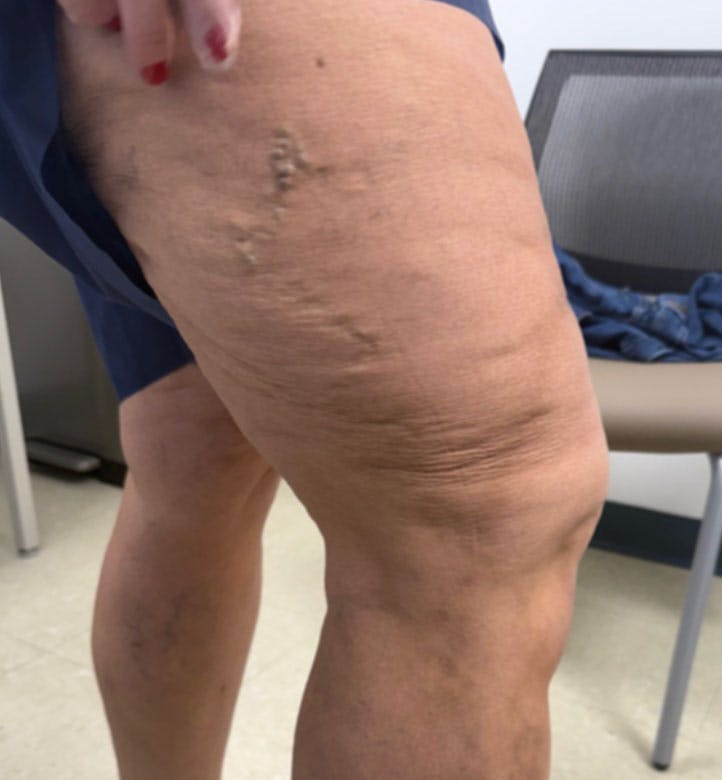
Transform your vein health with our Varithena in Glen Rock and Edison, NJ. This advanced treatment is a minimally invasive solution to effectively alleviate varicose veins, ensuring comfort and improved leg appearance with a fast recovery.

Transform your vein health with our Varithena in Glen Rock and Edison, NJ. This advanced treatment is a minimally invasive solution to effectively alleviate varicose veins, ensuring comfort and improved leg appearance with a fast recovery.



Varithena is a prescription medication in the form of a microfoam used to treat varicose veins. This treatment works to reduce both the appearance and symptoms of these veins, including pain, swelling, and inflammation.


Varithena microfoam is injected directly into the varicose vein. The foam expands, displacing the blood in the vein, and contacts the vein walls, causing them to collapse. Over time, the treated vein is absorbed by the body, rerouting blood flow to healthier veins.




After the treatment, you can walk normally. You can expect an uneventful, fast recovery. Most patients experience little to no downtime and can resume their regular activities almost immediately. The results of the treatment, including symptom relief and improved appearance of the veins, begin to appear soon after the procedure. You may be advised to wear compression stockings for a short period post-treatment. Follow-up appointments will be scheduled to ensure the success of the treatment and to monitor your recovery.

How is Varithena different from other injectable vein treatments?
Who is not a candidate for Varithena treatment?
Are there risks associated with Varithena treatment?
How long does Varithena remain in the body?
Can Varithena be used after previous vein treatments?
Does Varithena require ultrasound follow-up after treatment?
How soon can Varithena results be evaluated clinically?
Can Varithena be combined with other vein treatments?
Is Varithena treatment covered by insurance?
Will Varithena prevent new varicose veins from forming?
Varithena is a standardized, prescription microfoam with controlled consistency, allowing for predictable distribution within larger varicose veins compared to traditional compounded foams.
Varithena may not be appropriate for patients with certain blood clotting disorders, known allergies to polidocanol, or specific circulatory conditions identified during evaluation.
Varithena is considered very safe, but potential risks include temporary inflammation, localized tenderness, skin discoloration, allergic reaction, or, rarely, blood clots.
The microfoam itself does not remain permanently. The treated vein gradually closes and is absorbed by the body over time as circulation is redirected.
Yes. Varithena is often used in patients who have had prior vein procedures and still have residual or recurrent varicose veins.
Follow-up ultrasound imaging is commonly used to confirm successful vein closure and assess overall circulation after treatment.
Symptom improvement may be noticed early, but full evaluation of treatment success typically occurs several weeks later during follow-up visits.
Yes. Varithena is frequently used as part of a comprehensive treatment plan that may include other minimally invasive therapies based on vein anatomy.
Insurance coverage depends on medical necessity and ultrasound findings. Our team assists with insurance verification and authorization when applicable.
Varithena treats existing diseased veins but does not prevent future vein issues. Long-term vein health monitoring is important due to the chronic nature of venous disease.